
“The good physician treats the disease; the great physician treats the person who has the disease.”
– William Osler
Introduction
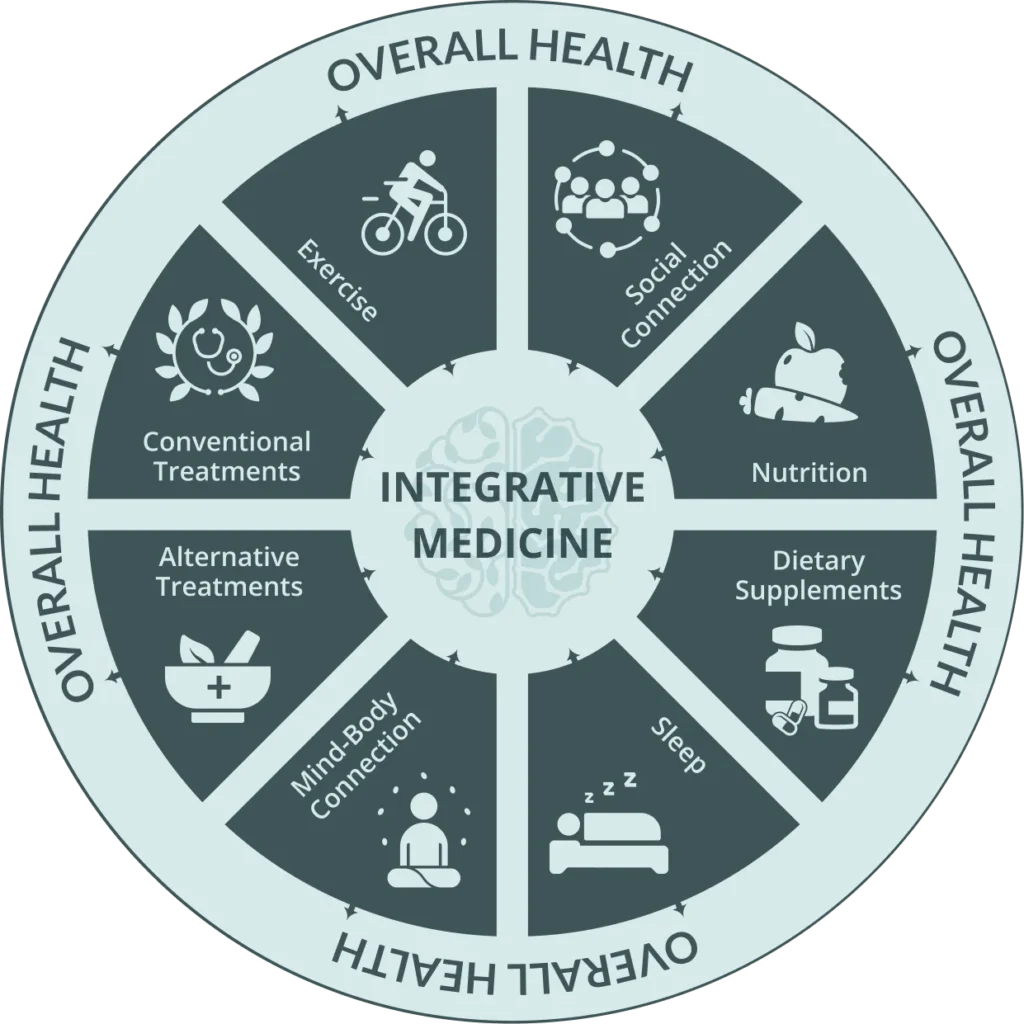
Integrative medicine takes a whole-person approach to health, considering the physical, mental, emotional, behavioral, and lifestyle factors that can influence well-being.
Rather than focusing only on individual symptoms, integrative medicine combines appropriate conventional medical care with selected complementary approaches. Treatment is tailored to the individual’s needs, health goals, preferences, and circumstances.
Rees and Weil described integrative medicine as an approach that incorporates values from complementary medicine into conventional medical care. Snyderman and Weil similarly described it as an effort to bring greater attention to the roots of medicine, including individualized and patient-centered care.¹˒²
Why Do People Consider Integrative Medicine?
People may consider integrative medicine for many reasons. Some are looking for a broader approach to managing ongoing health concerns, while others want to make lifestyle changes that support their overall health.
Integrative medicine may be considered as part of care for:
- Chronic pain and persistent fatigue
- Fibromyalgia
- Diabetes
- Asthma
- Irritable bowel syndrome (IBS)
- Multiple sclerosis
- Anxiety
- Post-traumatic stress disorder (PTSD)
- Insomnia and sleep concerns
- Depression
- ADHD
- Addiction and substance-use concerns
- Supportive care during and after cancer treatment
The appropriate approach depends on the individual’s condition and should complement necessary conventional medical treatment rather than replace it.
Key Elements of Integrative Medicine
Integrative medicine can bring together different aspects of healthcare based on a person’s needs.
Conventional Medical Care
Conventional medical treatments may include:
- Medications: Used when appropriate to manage specific health conditions and symptoms.
- Surgery: Used when a surgical procedure is medically necessary.
- Other medical treatments: Diagnostic testing, monitoring, and other evidence-based interventions may be incorporated into an individual’s care.
Lifestyle and Behavioral Approaches
Lifestyle factors can play an important role in overall health. An integrative approach may consider:
- Nutrition
- Physical activity
- Sleep
- Stress management
- Social connection
- Behavioral patterns
- Substance use
These factors can be addressed alongside appropriate medical treatment.
Mind-Body Practices
Mind-body approaches focus on the relationship between mental and physical well-being. Depending on the individual’s needs and preferences, these may include:
- Meditation
- Mindfulness
- Yoga
- Relaxation techniques
- Biofeedback
Nutrition
Nutrition is another component that may be considered in integrative care. Dietary changes can be used to support overall health and address specific nutritional needs.
When nutritional supplements are considered, they should be evaluated carefully because some supplements can interact with medications or may not be appropriate for certain health conditions.
Complementary Therapies
Some individuals may use complementary therapies alongside conventional medical care. Examples include:
- Acupuncture
- Therapeutic massage
- Chiropractic care
- Tai chi
- Certain traditional medicine practices
The evidence and appropriate use of these approaches vary. They should be discussed with a qualified healthcare professional, particularly when someone has an existing medical condition or is taking medication.
Models of Integrative Medicine in Healthcare
Integrative medicine can be practiced in different ways depending on the healthcare setting, practitioner, and needs of the individual.
Research on integrative medicine models has described approaches that combine conventional medical treatments with complementary therapies and lifestyle-based interventions.³
The specific combination of treatments should be based on the individual’s health concerns, goals, medical history, and available evidence.
Naturopathy and Integrative Medicine
Naturopathy is one approach that may be incorporated into broader discussions of complementary and integrative healthcare.
Naturopathic approaches can include nutrition, lifestyle counseling, herbal products, and other practices. However, naturopathic medicine is distinct from conventional medical care, and the training, licensing, and scope of practice of naturopathic practitioners vary by location.
Patients should understand who is providing a particular treatment and how that treatment fits into their overall healthcare plan.
Complementary Approaches Used Alongside Conventional Care
Complementary approaches are generally intended to be used alongside, rather than instead of, appropriate conventional medical care.
Examples include:
Meditation and Yoga
Meditation and yoga may support relaxation, physical activity, stress management, and overall well-being. Their potential benefits depend on the individual and the specific practice.
Acupuncture
Acupuncture involves stimulating specific points on the body using thin needles. It is used for a variety of health concerns, although evidence for its effectiveness varies depending on the condition being treated.
Therapeutic Massage
Massage therapy may be used to support relaxation and manage certain types of muscle tension or discomfort.
Tai Chi
Tai chi is a traditional Chinese practice involving slow, controlled movements, balance, and focused breathing. It can also provide a form of gentle physical activity.
Biofeedback
Biofeedback uses monitoring devices to provide information about certain physiological processes. With guidance and practice, individuals may learn techniques to influence some of these processes.
Traditional Medicine Practices
Practices such as Ayurveda and Traditional Chinese Medicine have long histories and may be incorporated into some complementary health approaches. Their principles and treatment methods differ from those of conventional Western medicine.
Potential Benefits of Integrative Medicine
A whole-person approach may offer several potential benefits depending on the individual’s needs and treatment plan.
Personalized Care
Integrative medicine considers the individual’s symptoms, health history, lifestyle, preferences, and goals when developing a treatment plan.
Attention to Mental and Physical Health
Mental and physical health can influence each other. An integrative approach considers both when appropriate rather than treating them as completely separate areas.
Support for Healthy Lifestyle Habits
Nutrition, physical activity, sleep, stress management, and social connection may be incorporated into a broader plan to support overall health.
Comprehensive Care
Integrative care can bring together appropriate conventional treatments and complementary approaches, allowing different aspects of a person’s health to be considered as part of one overall plan.
Integrative vs. Integrated Behavioral Health
The terms integrative and integrated can sometimes be confused, but they generally describe different approaches.
Integrated behavioral health commonly refers to coordinating behavioral health services with other areas of healthcare. For example, psychotherapy and medication management may be coordinated as part of a patient’s mental healthcare.
Integrative medicine generally describes a broader whole-person approach that may consider conventional medical care alongside complementary approaches and lifestyle factors.
In both models, the goal is to provide care that considers the individual’s needs rather than focusing only on isolated symptoms.
Who Provides Integrative Medicine?
Integrative healthcare may involve different types of qualified healthcare professionals depending on the services being provided.
These can include:
- Medical doctors (MDs)
- Doctors of osteopathic medicine (DOs)
- Naturopathic doctors (NDs), where licensed and within their legal scope of practice
- Registered dietitians and nutrition professionals
- Mental health professionals
- Other appropriately licensed healthcare practitioners
Training, credentials, and legal scope of practice vary by profession and state. Patients should check a provider’s qualifications and make sure the practitioner is appropriately licensed for the care being offered.
Conclusion
Integrative medicine takes a whole-person approach to healthcare by considering physical health, mental health, lifestyle, nutrition, behavior, and other factors that may influence well-being.
Rather than replacing conventional medical care, integrative medicine can combine appropriate evidence-based medical treatments with selected complementary approaches when they are suitable for the individual.
For patients considering integrative care, discussing treatment options with qualified healthcare professionals can help ensure that complementary approaches are safe, appropriate, and coordinated with existing medical treatment.
References
- Rees L, Weil A. Integrated medicine: imbues orthodox medicine with the values of complementary medicine. BMJ. 2001;322(7279):119–120.
- Snyderman R, Weil AT. Integrative medicine: bringing medicine back to its roots. Archives of Internal Medicine. 2002;162(4):395–397.
- Templeman K, Robinson A. Integrative medicine models in contemporary primary health care. Complementary Therapies in Medicine. 2011;19(2):84–92.
Common Questions
Content Disclaimer: This article is for informational purposes only and does not constitute medical advice. Always consult with a qualified healthcare provider regarding your specific situation. Read our full content disclaimer